You probably know the story: three plucky pigs, a big bad wolf, and a trio of increasingly sturdy homes. It’s a fable so ingrained in our collective consciousness that its phrases are part of our everyday language. But have you ever paused to consider the true History and Origins of The Three Little Pigs? This isn't just a simple bedtime story; it's a centuries-old narrative steeped in oral tradition, evolving through various retellings before solidifying into the version we cherish today. Join us as we dig into the rich soil of folklore to uncover where this timeless tale truly began.
At a Glance: The Three Little Pigs Story Arc
Before we delve into the history, here's a quick refresher on the key elements that define this classic tale:
- Ancient Roots: Though exact origins are nebulous, the story existed orally for centuries before being written down.
- Key Publications: First appeared in print around the 1840s, with prominent versions by James Halliwell-Phillipps (1886) and Joseph Jacobs (1890) shaping its modern form.
- The Core Conflict: Three anthropomorphic pigs build houses of straw, sticks, and bricks, each facing the destructive force of a persistent wolf.
- The Stakes: In its traditional, often darker versions, the first two pigs are devoured by the wolf.
- The Resolution: The third, diligent pig outsmarts the wolf, ultimately leading to the wolf's demise, often by boiling.
- Central Morals: Hard work, planning, and foresight are rewarded; laziness and impulsivity lead to peril.
- Cultural Impact: Its phrases and lessons are deeply embedded in Western culture, serving as a foundational cautionary tale for children.
The Enduring Whisper of a Fable: From Hearth to Print
For many, The Three Little Pigs feels as old as time itself, and in a way, it is. Like countless classic narratives, its true History and Origins of The Three Little Pigs began not with pen and paper, but with the human voice, passed down through generations around flickering hearths and quiet nurseries. Before its literary debut, it was a living, breathing piece of oral tradition, subject to the fluidity and adaptation inherent in such storytelling.
The general consensus among folklorists is that versions of the story circulated widely for many years before appearing in print. This oral tradition meant countless nuances, regional variations, and even different protagonists likely existed, each storyteller adding their unique flavour.
Tracing the Threads: Early Appearances on the Page
While the exact "birth certificate" of the story remains elusive, its journey into the printed world provides concrete milestones for us to explore.
The earliest known printed versions of The Three Little Pigs date back to the 1840s. These initial printings likely captured existing oral narratives, solidifying them in a more permanent form for wider distribution. One particularly intriguing precursor emerged in 1853 from Dartmoor, England, featuring not pigs, but three pixies, and a fox as the cunning antagonist. This early variant underscores the adaptable nature of folktales, where core motifs can be re-clothed with different characters and settings.
The Defining Versions: Halliwell-Phillipps and Jacobs
The story we largely recognize today truly began to take shape with the efforts of two influential folklorists.
James Halliwell-Phillipps, a prominent English scholar and Shakespearean expert, published a version in his 1886 collection, Nursery Rhymes of England. It was in this edition that several of the tale's most iconic and enduring phrases were introduced. Think about it: "not by the hair of my chiny chin chin" and the wolf's menacing threat, "I'll huff, and I'll puff, and I'll blow your house in." These memorable lines quickly became synonymous with the story, etching themselves into the collective consciousness.
Just four years later, in 1890, Joseph Jacobs included The Story of the Three Little Pigs in his immensely popular English Fairy Tales. Jacobs's version, which credited Halliwell-Phillipps, quickly became one of the most widely known and influential retellings. It’s a testament to these foundational publications that the story gained such widespread recognition, moving from regional folklore to an international classic. If you're keen to the enduring power of children's fables, looking at the impact of these early collections is a great starting point.
The Core Narrative: A Tale of Tenacity and Trickery
At its heart, the story of The Three Little Pigs is a classic confrontation between industry and idleness, foresight and folly. It’s a compelling narrative that captivates young audiences while subtly imparting profound lessons.
The Fateful Construction Projects
The plot revolves around three anthropomorphic pigs, recently sent out into the world by their mother to make their own way. Their first task: building a home to protect themselves from the infamous Big Bad Wolf.
- The First Pig (Straw): Opting for the quickest and easiest path, the first pig constructs a house of straw. It's built in a flash, allowing for immediate leisure, but offering little protection.
- The Second Pig (Sticks): The second pig, slightly more ambitious but still prioritizing speed over strength, builds a house of sticks. It's marginally better than straw but equally vulnerable to a determined predator.
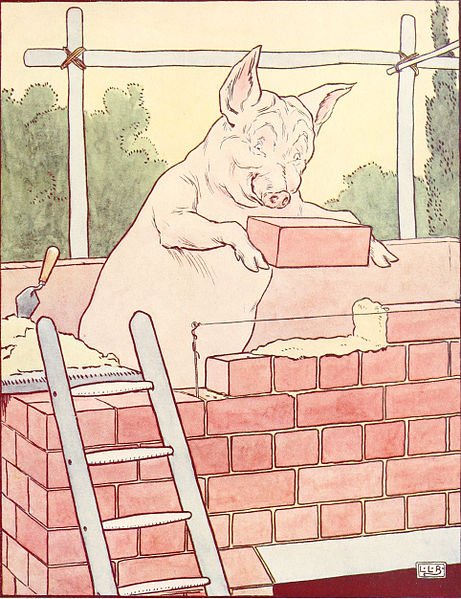
- The Third Pig (Bricks): The third pig, however, is a model of diligence. Understanding the dangers that lurk, this pig invests considerable time and effort into building a robust house of bricks, ensuring a strong foundation and lasting security.
The Wolf's Relentless Pursuit
True to his reputation, the Big Bad Wolf soon appears, hungry and eager for an easy meal. He confronts the first pig, demanding entry. When refused, he delivers his infamous threat: "I'll huff, and I'll puff, and I'll blow your house in!" And he does. The straw house is no match for his powerful breath, and in many traditional tellings, the wolf promptly devours the first pig.
He then moves to the stick house, repeating the same menacing performance. Again, the house crumbles, and the second pig meets the same grim fate as their sibling. This dark aspect of the original tale, often softened in modern adaptations, serves as a stark warning about the consequences of poor choices.
Finally, the wolf reaches the brick house. He huffs, and he puffs, and he blows with all his might, but the sturdy brick dwelling stands firm. Frustrated and foiled, the wolf resorts to cunning.
The Battle of Wits and the Wolf's Demise
The narrative then shifts from physical confrontation to a battle of wits. The wolf attempts to trick the clever third pig, suggesting meeting points like a turnip field, an apple orchard, and a fair. Each time, the pig outsmarts the wolf by arriving early, gathering the goods, and returning safely home, often even showing off the spoils of their timely efforts. This recurring pattern, known as the "rule of three," builds suspense and emphasizes the pig's superior intelligence and planning. It's a classic literary motif that you'll find woven into countless stories; you can explore other classic literary motifs to see its pervasive influence.
The wolf's final desperate attempt is to enter through the chimney. But the resourceful pig, ever prepared, has anticipated this move. A roaring fire is lit, and a large pot of boiling water is placed directly beneath the chimney. When the wolf descends, he plunges straight into the scalding water, meeting a gruesome end. In the darkest, most traditional versions, the pig then cooks and eats the wolf, a dramatic reversal of the predator-prey dynamic, emphasizing the ultimate triumph of good over evil (or, perhaps, diligence over gluttony).
A World of Variations: When Pigs Fly (or Escape)
Like any good folktale, The Three Little Pigs is not a monolith. Its journey through oral tradition and subsequent publications has resulted in numerous fascinating variations, each offering a slightly different twist on the core narrative.
The Fate of the First Two Pigs
One of the most significant variations concerns the fate of the first two pigs. While the traditional versions, particularly those collected by Halliwell-Phillipps and Jacobs, depict the wolf devouring them, many modern retellings soften this grim detail. In these kinder versions, the first two pigs often manage to escape to the brick house of their diligent sibling just before their own flimsy homes are destroyed. This shift allows the story to maintain its moral lessons without the intensity of sibling demise, making it more suitable for very young children.
Different Antagonists and Protagonists
The animal characters themselves are not always fixed.
- Fox vs. Wolf: As mentioned earlier, the 1853 Dartmoor version featured a fox as the villain, and the protagonists were pixies, not pigs. This highlights the fluidity of character types in early folklore. Andrew Lang's 1892 version of the tale also features a fox as the antagonist, with pigs named Browny, Whitey, and Blacky.
- Br'er Rabbit: In American folklore, Joel Chandler Harris incorporated similar narrative elements into his Br'er Rabbit tales (1881, 1883). While not directly about pigs, these stories often feature a clever rabbit outsmarting a larger, less intelligent predator (often Br'er Fox or Br'er Bear), utilizing comparable tactics of evasion and wit.
Alternative Construction Materials
Even the houses themselves can vary. While straw, sticks, and bricks are the standard, some versions might feature:
- Mud or Clay: As an alternative to straw, emphasizing a slightly more robust but still vulnerable structure.
- Cabbage or Other Vegetable Houses: In more whimsical retellings, further highlighting the absurdity and fragility of poor construction.
These variations, while seemingly minor, underscore the adaptive nature of folklore, allowing the story to resonate across different cultures and age groups.
The Deeper Meanings: Beyond Bricks and Wolves
The enduring appeal of The Three Little Pigs isn't just in its thrilling plot or memorable phrases; it’s in the powerful, timeless lessons it imparts. This isn't merely entertainment; it's a profound guide wrapped in a simple narrative.
Core Moral Lessons
The story delivers two primary, interconnected morals that have resonated for centuries:
- The Value of Hard Work and Diligence: The tale is a clear-cut allegory for the principle that putting time, effort, and care into any endeavor in life will ultimately pay off. The third pig's arduous work on a brick house directly leads to his safety and success, while the first two pigs' shortcuts lead to their peril.
- The Importance of Prioritization and Planning: The narrative contrasts impulsive, pleasure-seeking behavior with thoughtful, protective planning. The lazy approach of the first two pigs, prioritizing immediate gratification, is juxtaposed with the diligent, foresightful planning of the third, who understood the need for a solid foundation against future threats. This emphasis on careful preparation is a cornerstone of responsible living. If you’re interested in other tales that impart crucial moral lessons, you'll find many fables echo these same sentiments.
Embedded in Culture: A Folktale's Legacy
The phrases "I'll huff, and I'll puff, and I'll blow your house in" and "not by the hair of my chiny chin chin" are deeply embedded in Western culture, used frequently in common parlance, political commentary, and even advertising. This isn't accidental; it's a testament to the story's profound cultural penetration.
In the academic world of folklore, The Three Little Pigs is classified in the Thompson Motif Index as a Type B124 folktale, a classification system used to organize and study recurring narrative elements and themes across global myths, legends, and fables. This categorization highlights its structural significance within the broader tapestry of human storytelling. For those delving deeper into folklore studies, understanding these indices provides a framework for comparative analysis.
The story itself often uses a literary device known as the "rule of three," specifically a "contrasting three." This structure enhances memorability and impact, making the distinctions between the pigs' choices and fates all the more stark.
Unpacking the Psychology: Bettelheim's Perspective
Beyond its surface morals, famed child psychologist Bruno Bettelheim offered a deeper, more psychological interpretation of The Three Little Pigs in his influential 1976 work, The Uses of Enchantment: The Meaning and Importance of Fairy Tales.
Bettelheim viewed the tale as a critical teaching tool for children, guiding them through essential developmental stages. He suggested that the story showcases:
- Anticipation and Courage in Adversity: The third pig embodies the ability to anticipate problems and face them with courage and preparedness, rather than succumbing to fear or denial.
- Building a Solid Foundation for Life: Bettelheim argued that individuals who fail to build a strong psychological and practical foundation in life will inevitably be destroyed by its inherent difficulties and challenges. Only those who construct a "solid base" – metaphorically, a well-developed self and a resilient approach to life – can withstand the inevitable hazards.
- Transition from Pleasure Principle to Reality Principle: Perhaps Bettelheim's most profound interpretation is that the tale helps children understand the necessity of moving from the "pleasure principle" to the "reality principle."
- Pleasure Principle: This is the immediate gratification sought by the first two pigs, who want instant enjoyment without foresight or effort.
- Reality Principle: This is the understanding that long-term satisfaction and security often require delayed gratification, hard work, planning, and an acknowledgment of potential difficulties. The third pig's journey from building to outsmarting the wolf perfectly illustrates this mature approach to life.
Through this lens, The Three Little Pigs becomes more than a cautionary tale; it's a blueprint for psychological development, teaching children the vital skills of planning, foresight, and resilience. This kind of nuanced perspective is why it's so fascinating to consider how stories like this are analyzed today.
Why This Story Still Resonates Today
Centuries after its likely oral beginnings, The Three Little Pigs continues to be a cornerstone of children's literature and a touchstone in adult conversation. Its timeless themes and relatable characters ensure its enduring relevance.
In an increasingly complex world, the lessons of preparedness, hard work, and smart planning are arguably more crucial than ever. The wolf, representing unexpected challenges and threats to our well-being, is a metaphor that adapts easily to modern anxieties—from financial instability to environmental concerns, or even navigating personal relationships.
When we tell this story, we're not just sharing a narrative; we're passing down a piece of human wisdom, encouraging resilience, responsibility, and the understanding that effort truly does build better, more enduring foundations. Whether you’re reading it to a child or simply reflecting on its messages, The Three Little Pigs remains a powerful reminder of how to approach the "big bad wolves" in our own lives. To dive deeper into the iconic characters and their enduring legacy, you can always Learn about the little pigs in more detail.
Building Your Own Brick House
The History and Origins of The Three Little Pigs reveals more than just a timeline of publications; it uncovers a dynamic narrative that has adapted, endured, and enriched generations. From ancient whispers to seminal printed collections, this fable has consistently served as a profound teacher, using simple characters to illustrate complex truths about diligence, planning, and resilience.
What began as a cautionary tale to prepare children for life's inevitable challenges has evolved into a cultural touchstone. Its message—that a sturdy foundation, built with care and foresight, is the best defense against life’s "big bad wolves"—remains as vital today as it was when first whispered around a fire. So, as you go about your day, consider which kind of house you're building in your own life. Are you opting for straw, sticks, or the lasting strength of bricks? The story’s lesson, as always, is clear.