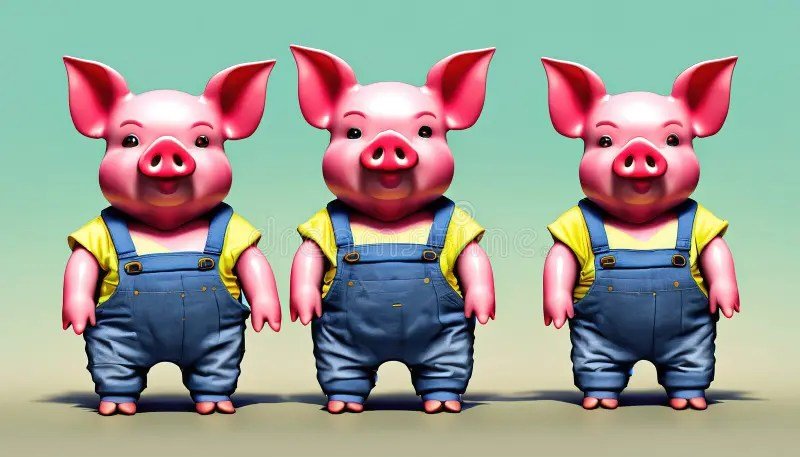
Few tales are as ingrained in our collective memory as the timeless saga of the three little pigs and their encounters with a cunning wolf. But beyond the simple narrative of straw, sticks, and bricks, lies a rich tapestry of distinct personalities that have captivated audiences for generations. These aren't just generic pigs; they are fully realized characters whose choices, flaws, and strengths drive the story's enduring appeal and impart valuable lessons about diligence, preparedness, and ingenuity.
Whether you first encountered them in the classic Disney Silly Symphony or through countless retellings, the individual characters of The Three Little Pigs offer a fascinating study in archetypes. They remind us that even in the simplest stories, personality is paramount, making their struggle and eventual triumph resonate deeply.
At a Glance: The Three Little Pigs' Distinct Personalities
- Fifer Pig: The carefree, fun-loving musician who prioritizes immediate gratification over long-term security. Jolly, extroverted, and a bit naive.
- Fiddler Pig: Similar to Fifer, he's a lively musician, valuing fun and leisure above hard work. Also prone to underestimating danger.
- Practical Pig: The diligent, serious, and sensible elder brother. He believes in hard work, planning, and preparation, ultimately becoming the group's protector and leader.
- The Big Bad Wolf: The persistent, cunning, and perpetually hungry antagonist who relies on deception and brute force, representing immediate threats and temptation.
The Enduring Tale: A Brief Overview of the Classic Story
The story of the Three Little Pigs, particularly its most famous Disney adaptation, begins with three anthropomorphic pig brothers setting out to build their own homes. Their choices in building materials – straw, sticks, and bricks – directly reflect their individual work ethics and foresight. When the notorious Big Bad Wolf comes calling, these choices are put to the ultimate test, leading to a dramatic chase and a clear moral about the rewards of diligence.
The narrative quickly establishes the fundamental conflict: the pigs' desire for safety against the wolf's predatory instincts. It’s a classic setup that allows their distinct personalities to shine through their actions, or inactions, as the case may be. The initial destruction of two homes and the eventual refuge in the third cement their roles and dynamics for future adventures.
Meet the Brothers: Personalities That Pop
While they are brothers, Fifer, Fiddler, and Practical Pig couldn't be more different. Their unique temperaments are not just narrative devices; they are the very engine of the story, shaping their decisions and determining their fates.
Fifer Pig: The Flamboyant Musician
Fifer Pig, the youngest of the trio, is the quintessential free spirit. Known for playing the flute, his character is defined by a deep love for music, dancing, and generally having a good time. He's jolly and extroverted, always ready for a party, and quick to dismiss serious concerns for the sake of fun.
His house, famously built of straw and hay, is a direct manifestation of his "easy come, easy go" attitude. It's the quickest to build, requiring minimal effort, which perfectly suits his desire to get to the fun part of life as fast as possible. This impulsiveness, however, makes him incredibly vulnerable. Fifer often downplays dangers, a trait that frequently leads him into trouble, making him an easy target for the Big Bad Wolf. Despite his flightiness, Fifer is undeniably friendly and brings a lighthearted energy to the group, often acting as the initial catalyst for playful (and sometimes perilous) escapades.
Fiddler Pig: The Jovial Jester
Fiddler Pig occupies the middle ground, both in age and sometimes in temperament, though he largely mirrors Fifer's carefree nature. Dressed in a distinctive sailor suit and rarely seen without his fiddle, Fiddler is another ardent devotee of fun and music. He shares Fifer's jolly, extroverted disposition and their collective tendency towards laziness when hard work is on the table.
His choice to build a house of sticks reflects a slightly more substantial, but still ultimately inadequate, effort compared to straw. It suggests a tiny step up in perceived effort, but not enough to truly protect him. Like Fifer, Fiddler is prone to underestimating threats and prioritizing immediate amusement over long-term safety, often ignoring Practical Pig's warnings. He's often seen joining Fifer in their musical revelries, their combined joviality forming a formidable (and sometimes foolish) front against the world. Their stubbornness in ignoring good advice is a recurring theme, highlighting the common human tendency to resist prudence in favor of pleasure.
Practical Pig: The Sensible Savior
Practical Pig stands in stark contrast to his two younger brothers. As the eldest and often the unspoken leader, he embodies responsibility, foresight, and a rigorous work ethic. His stern, serious demeanor is softened by his underlying care for his siblings, but he makes no secret of his belief in "work before play." While his brothers are busy with their flute and fiddle, Practical is often depicted masterfully playing the piano, but only after his duties are done.
Practical's iconic brick house is the physical embodiment of his personality. It's built with solid, durable materials, requiring immense effort and planning, but ultimately proving impervious to the Big Bad Wolf's most aggressive attempts. His ingenuity isn't limited to construction; he's often the one devising traps, warnings (like his Wolf Alarm in "Three Little Wolves"), and clever solutions to outsmart the wolf. His logical demeanor and sensible approach consistently save the day, making him the anchor of the trio. While his brothers might find him a bit of a killjoy at times, they invariably seek refuge and guidance in his wisdom when true danger arises. Practical Pig serves as the moral compass and the voice of reason, demonstrating that hard work and foresight are not just virtues but necessities for survival.
The Big Bad Wolf: A Persistent Adversary
No discussion of the characters of The Three Little Pigs would be complete without acknowledging their tireless antagonist: the Big Bad Wolf. He's not just a plot device; he's a character with his own distinct, albeit villainous, personality. Driven by insatiable hunger and a cunning mind, the wolf represents the external forces of danger and temptation that challenge the pigs' choices.
His primary traits include:
- Cunning and Deceptive: The wolf frequently employs disguises, from an innocent sheep to a charming mermaid, to trick the unsuspecting pigs. He understands their weaknesses – Fifer and Fiddler's naivety, Practical's concern for his brothers – and exploits them masterfully.
- Persistent and Relentless: He never gives up, returning again and again with new schemes even after repeated failures. His catchphrase, "I'll huff and I'll puff and I'll blow your house down!", is a testament to his determination and brute force.
- Predatory and Self-Serving: His motivations are simple: hunger and a desire to assert dominance. He embodies a primal threat, a force of nature that the pigs must learn to overcome.
The wolf's presence is crucial for the pigs' character development, particularly for Fifer and Fiddler, who are forced to confront the consequences of their carefree attitudes. Without the wolf, Practical Pig's wisdom would lack its practical demonstration, and the story's moral lessons wouldn't be nearly as impactful.
Beyond the Bricks: Character Dynamics and Lessons Learned
The interactions between these distinct personalities are what elevate The Three Little Pigs from a simple fable to a rich narrative. Their dynamic teaches us about human nature, sibling relationships, and the timeless virtues of diligence.
The Perils of Procrastination: Fifer and Fiddler's Fatal Flaw
Fifer and Fiddler serve as cautionary tales. Their love for music and leisure, while charming, highlights the dangers of prioritizing immediate gratification over long-term security. They consistently downplay threats, dismissing Practical's warnings with playful songs and dances. This isn't just laziness; it's a form of denial, a belief that good times will last forever and that problems can be wished away.
Their repeated susceptibility to the wolf's schemes, and the destruction of their homes, are direct consequences of their lack of foresight and hard work. Yet, their friendliness and extroverted nature make them endearing, reminding us that even flawed characters have positive qualities. Their journey is one of gradual realization, often requiring dramatic events to shift their perspectives.
The Power of Prudence: Practical's Enduring Wisdom
Practical Pig is the story's moral anchor. His diligence, foresight, and ingenuity are consistently rewarded. He represents the mature, responsible approach to life, understanding that true enjoyment comes after laying a solid foundation. His sternness isn't born of cruelty but of a deep understanding of consequence.
He isn't just building a house; he's building security, peace of mind, and a safe haven for his family. Practical's role extends beyond building; he's the strategist, the inventor (like the Wolf Alarm), and the one who devises clever traps to outsmart their adversary. His character underscores the value of practical skills, critical thinking, and disciplined effort, proving that preparedness is the ultimate defense.
Sibling Rivalry and Rescue: How They Grow Together
While Fifer and Fiddler often mock Practical's serious nature, and Practical can be exasperated by his brothers' antics, their bond is undeniable. When danger strikes, they instinctively turn to their sensible brother. Practical, despite his frustration, always takes them in and protects them. This dynamic teaches us about the complexities of family relationships – the differing personalities, the disagreements, but also the unwavering support in times of need.
Over their various adventures, Fifer and Fiddler slowly, if reluctantly, begin to learn from Practical. The constant threat of the wolf, coupled with Practical's consistent wisdom, gradually shapes their understanding of responsibility. Their journey together is a testament to growth, showing how even the most carefree individuals can learn the value of a little hard work and foresight.
A World Beyond Straw and Sticks: The Pigs' Expansive Universe
The distinct personalities of The Three Little Pigs have made them perennial favorites, leading to an extensive legacy beyond their original short film. Their appeal transcends generations, allowing them to adapt to various media while retaining their core traits. From animated shorts to theme park appearances, these characters have truly become global icons. If you’re captivated by their journey, you might want to explore the world of little pigs even further.
Silver Screen Adventures: Short Films and Cameos
The success of the original "Three Little Pigs" Silly Symphony led to several direct sequels, further exploring their characters and dynamics:
- "The Big Bad Wolf" (1934): This short highlights Fifer and Fiddler's continued recklessness as they escort Little Red Riding Hood against Practical's advice. Practical once again steps in to defeat the wolf, reinforcing his role as the protector.
- "Three Little Wolves" (1936): Practical's ingenuity is on full display as he invents a "Wolf Alarm." However, Fifer and Fiddler's misuse of it for pranks leads to genuine peril when the wolf and his three sons capture them. Practical's initial exasperation gives way to a heroic rescue, solidifying his patience and leadership.
- "The Practical Pig" (1939): This short sees the wolf resorting to an elaborate mermaid disguise to capture Fifer and Fiddler. Practical's advanced methods, including a homemade lie detector, are crucial in locating and rescuing his brothers, showcasing his evolving intelligence.
Beyond these dedicated shorts, the pigs made numerous cameos, cementing their status as beloved Disney figures. They appeared as audience members in classics like "Toby Tortoise Returns" and "Mickey's Polo Team" and were even featured dragging a tied-up wolf in the animated opening for the 1950s "Mickey Mouse Club." A concept for "Fantasia 2000" also considered their inclusion, demonstrating their enduring creative appeal.
From Theme Parks to Comic Panels: Expanded Canon
The reach of the Three Little Pigs extends far beyond the silver screen, proving their adaptable personalities can thrive in diverse storytelling formats.
- Television Appearances: Their return in "Mickey Mouse Works" and regular guest spots in "House of Mouse" allowed for new character explorations. In "House of Mouse," they sometimes appeared as a jazz band, leaning into their musical talents, and in other instances, Practical was notably the only one to speak, emphasizing his grounded nature. They've also helped build a home in "Mickey's Magical Christmas" and played pivotal roles in "Mickey's House of Villains." More recently, in "The Wonderful World of Mickey Mouse" episode "The Big Good Wolf," they found themselves needing rescue from a wolf who literally consumed them and took Practical’s house, leading to Mickey’s intervention.
- Printed Media: The pigs had a prolific career in Silly Symphonies comic strips and various Disney comic books. A significant development in print was their friendship with the Big Bad Wolf's son, Li'l Bad Wolf, in "Walt Disney's Comics and Stories #54" (March 1945). This softer dynamic allowed Fifer and Fiddler's friendly nature to shine through in a different context, while Practical often had to reconcile the family feud. They even donned the Junior Woodchucks uniform, showing their versatility in different adventurous roles.
- Video Games: While some ideas were scrapped, the pigs were conceptualized for "Epic Mickey 2: The Power of Two." Fifer was designed to give Mickey a quest, leading to a reunion with his brothers who then asked for help paying a debt – with Practical suggesting a new record album and Fifer suggesting playing for The Usher, neatly capturing their established personalities even in a gaming context.
- Disney Parks: Since Disneyland's opening in 1955, the pigs have been cherished walkaround characters, meeting and greeting guests. They had a notable run in Disneyland's Fantasmic! and make vocal appearances in fireworks displays. Their prominent role in Disneyland Resort's 2019 Year of the Pig Chinese New Year celebrations underscored their global appeal and iconic status. At Tokyo Disney Resort, they remain popular figures in World Bazaar and Toontown, captivating audiences worldwide.
Common Questions About the Three Little Pigs' Personalities
Given their lasting impact, several questions frequently arise about the distinct personalities of these famous pigs.
Are Fifer and Fiddler identical in personality?
While very similar, sharing traits of being jolly, lazy, and cowardly, they often present as distinct entities through their specific instruments (flute vs. fiddle) and minor visual cues (Fiddler's sailor suit). The core personality – fun-loving, extroverted, and somewhat reckless – is shared, making them a complementary duo for mischief and song.
Why is Practical Pig always so serious?
Practical Pig's seriousness stems from his deep sense of responsibility and foresight. He understands the potential dangers of the world and the importance of preparedness. His stern demeanor is a reflection of his dedication to hard work and safety, which often puts him at odds with his brothers' carefree attitudes, but ultimately makes him their protector.
Does the Big Bad Wolf ever change?
In the classic shorts, the Big Bad Wolf remains a persistent antagonist, driven by hunger and cunning. However, in later comic book adaptations, particularly those featuring his son, Li'l Bad Wolf, his character sometimes shows a slightly softer, more complex side, especially when dealing with his son's friendship with the pigs. This shows the adaptability of the characters across different media.
What lessons do their personalities teach us?
The contrasting personalities offer clear moral lessons:
- Fifer and Fiddler: The dangers of procrastination, complacency, and underestimating threats.
- Practical Pig: The rewards of diligence, foresight, hard work, and ingenuity.
- The Big Bad Wolf: The reality of external dangers and the need for preparedness.
The story ultimately champions prudence and responsibility over idleness and naivety.
The Lasting Legacy: Why These Characters Still Resonate
The characters of The Three Little Pigs resonate because they perfectly encapsulate universal human traits and conflicts. We see ourselves, our friends, and our family members in their distinct personalities: the carefree spirits, the diligent planners, and even the persistent challenges we face. Fifer and Fiddler, with their infectious joy and occasional lapses in judgment, remind us of the appeal of immediate pleasure and the struggles with self-discipline. Practical Pig, steadfast and wise, stands as an aspirational figure, embodying the virtues of hard work and foresight that lead to security and success. And the Big Bad Wolf, ever-present, represents the unpredictable challenges and temptations that test our resolve.
This timeless narrative, powered by its well-defined characters, continues to teach essential lessons about responsibility, resilience, and the power of a solid foundation – not just in bricks, but in character itself. Their enduring appeal ensures that future generations will continue to find both entertainment and wisdom in their classic tale.